
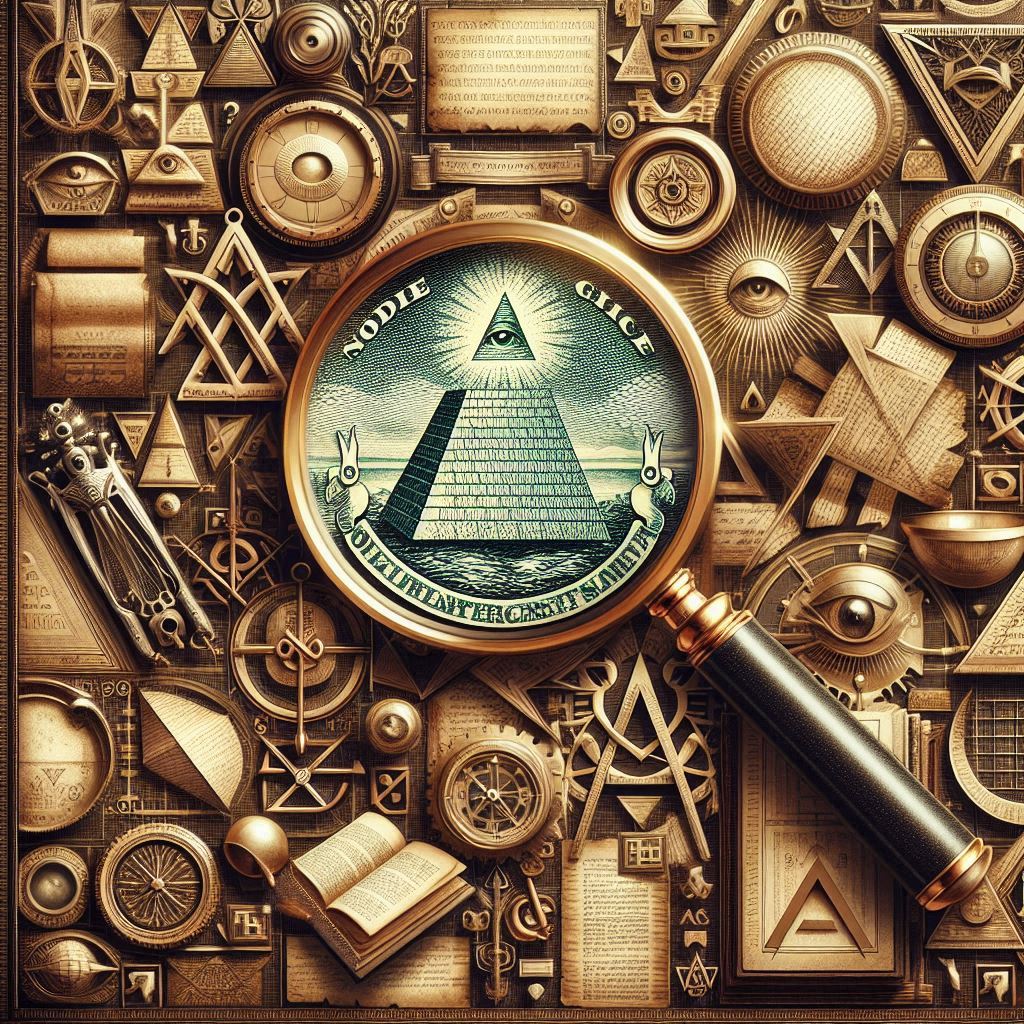
Welcome to the enigmatic world of secret societies, where whispers of conspiracy theories and clandestine gatherings provoke curiosity and intrigue. Have you ever found yourself pondering the hidden influence of groups like the Illuminati and Freemasons? You’re not alone. From ancient times to the present day, these mysterious organizations have captivated the imagination of people around the globe. But what lies beneath the surface of these secretive groups, and how much of their influence is real? Join us on a journey as we peel back the layers of secrecy to uncover the truth behind these legendary organizations.
Illuminati: Behind the Curtain
To understand the allure of the Illuminati, we must first journey back to the late 18th century. Founded in Bavaria by Adam Weishaupt in 1776, the Illuminati aimed to promote Enlightenment ideals and challenge the oppressive power structures of the time. However, their clandestine nature and alleged quest for global domination quickly sparked conspiracy theories that persist to this day. While historical evidence suggests that the original Illuminati disbanded in the late 1780s, rumors of their continued existence and influence persist, fueling speculation and intrigue.
The alleged influence of the Illuminati spans a wide range of domains, from politics and finance to popular culture. Some theorists claim that the Illuminati manipulate world events from behind the scenes, pulling the strings of governments and shaping the course of history. Others point to occult symbols hidden in plain sight, alleging that these symbols serve as markers of Illuminati presence and influence. While concrete evidence of Illuminati activity remains elusive, the allure of the secret society continues to captivate the imagination of conspiracy theorists and curious minds alike.
Freemasons: Builders of Secrets
Enter the world of the Freemasons, an ancient and storied fraternity with roots dating back centuries. Originally comprised of skilled stonemasons who built the great cathedrals and castles of Europe, the Freemasons evolved into a secretive society bound by rituals and traditions. Central to Freemasonry is the concept of brotherhood, where members support one another and strive for personal growth and enlightenment.
One of the most fascinating aspects of Freemasonry is its rich tapestry of symbolism. From the square and compass to the all-seeing eye, Freemasonry is rife with symbols that carry deep meaning and significance. These symbols serve as a roadmap for personal development, guiding members on a journey of self-discovery and moral enlightenment.
But beyond the symbolism lies a network of secret rituals and ceremonies shrouded in mystery. Initiation into Freemasonry involves a series of rites and degrees, each imparting its own teachings and insights. While the specifics of these rituals are closely guarded secrets, their symbolic significance is said to impart valuable lessons on morality, virtue, and the nature of existence.
Despite their secretive nature, Freemasonry has had a profound impact on society. Many influential figures throughout history, from George Washington to Mozart, were members of the fraternity. Yet, the true extent of Freemasonic influence remains a subject of debate and speculation. While some see the fraternity as a benign force for good, others view it with suspicion, citing its secretive nature and alleged connections to global power structures.
The Intersection: Where Myth Meets Reality
As we delve deeper into the world of secret societies, we inevitably encounter the murky waters where myth and reality converge. The allure of conspiracy theories surrounding groups like the Illuminati and Freemasons is undeniable, drawing us into a realm where truth becomes intertwined with speculation and conjecture.
Conspiracy theories surrounding the Illuminati range from the plausible to the outlandish, with some alleging their involvement in everything from the French Revolution to modern-day pop culture. Yet, separating fact from fiction can be a daunting task in a landscape where sensationalism often overshadows evidence-based inquiry. While it’s important to approach these theories with a critical eye, we must also acknowledge their cultural significance and the questions they raise about power and influence in society.
Similarly, the Freemasons have been the subject of countless conspiracy theories, with some alleging their involvement in everything from shaping world events to controlling the global economy. While the fraternity’s secretive nature undoubtedly fuels speculation, it’s essential to critically evaluate the evidence before jumping to conclusions. By examining the historical record and scrutinizing claims against credible sources, we can gain a clearer understanding of the role Freemasonry plays in the world today.
Yet, amid the swirl of conspiracy theories and speculation, it’s crucial to remember that not everything is as it seems. While secret societies undoubtedly exist and wield influence in various spheres of society, their true impact may be far more nuanced than the sensational narratives would suggest. By approaching these topics with an open mind and a healthy dose of skepticism, we can navigate the intersection where myth meets reality and uncover the truths that lie beneath the surface.
Unveiling Truths: Navigating the Enigma
As we navigate the labyrinth of conspiracy theories and speculation surrounding secret societies, it’s essential to equip ourselves with the tools of critical thinking and discernment. While it’s natural to be drawn to tales of intrigue and mystery, it’s equally important to subject these narratives to rigorous scrutiny and evaluation.
One of the first steps in unraveling the enigma of secret societies is to approach the topic with an open mind and a healthy dose of skepticism. While it’s tempting to succumb to sensationalism and sensational narratives, we must resist the urge to accept claims at face value and instead demand evidence and reasoned analysis.
Furthermore, we must be vigilant against the dangers of confirmation bias, which can lead us to cherry-pick information that supports our preconceived notions while disregarding evidence that challenges them. By maintaining a willingness to question our own assumptions and seek out diverse perspectives, we can guard against the pitfalls of cognitive bias and arrive at a more nuanced understanding of complex issues.
In our quest for truth, it’s also essential to consult credible sources and subject information to rigorous fact-checking. With the proliferation of misinformation and disinformation in the digital age, it’s more crucial than ever to verify the accuracy of the information we encounter and rely on reputable sources with a track record of accuracy and integrity.
Ultimately, the journey to uncovering the truth about secret societies is a personal one, requiring each of us to engage in critical inquiry and independent thinking. While this article offers insights and guidance, it’s important to remember that the quest for truth is ongoing, and each of us must forge our own path.
Encouraging Exploration
As we conclude our exploration of secret societies and their hidden influence, it’s essential to recognize that this article is just the beginning of a much larger journey. While we’ve delved into the history, symbolism, and conspiracy theories surrounding groups like the Illuminati and Freemasons, there is still much left to uncover and understand.
For those intrigued by the mysteries of secret societies, I encourage you to continue your exploration with an open mind and a spirit of curiosity. Dive deeper into the rich tapestry of historical records, academic research, and firsthand accounts to gain a more comprehensive understanding of these enigmatic organizations.
But remember, the quest for truth is not always straightforward, and the path may be fraught with twists and turns. Approach the subject with a healthy skepticism and a willingness to question assumptions, and don’t be afraid to challenge conventional wisdom and explore alternative perspectives.
Ultimately, the journey to unraveling the mysteries of secret societies is a deeply personal one, shaped by individual experiences, beliefs, and insights. So embrace the adventure, and may your quest for knowledge lead you to new discoveries and a deeper understanding of the world around you.
In the end, remember that this article is just a guide, and the true journey lies in your own exploration and discovery. Keep questioning, keep seeking, and keep exploring, for the truth is out there waiting to be uncovered.

