
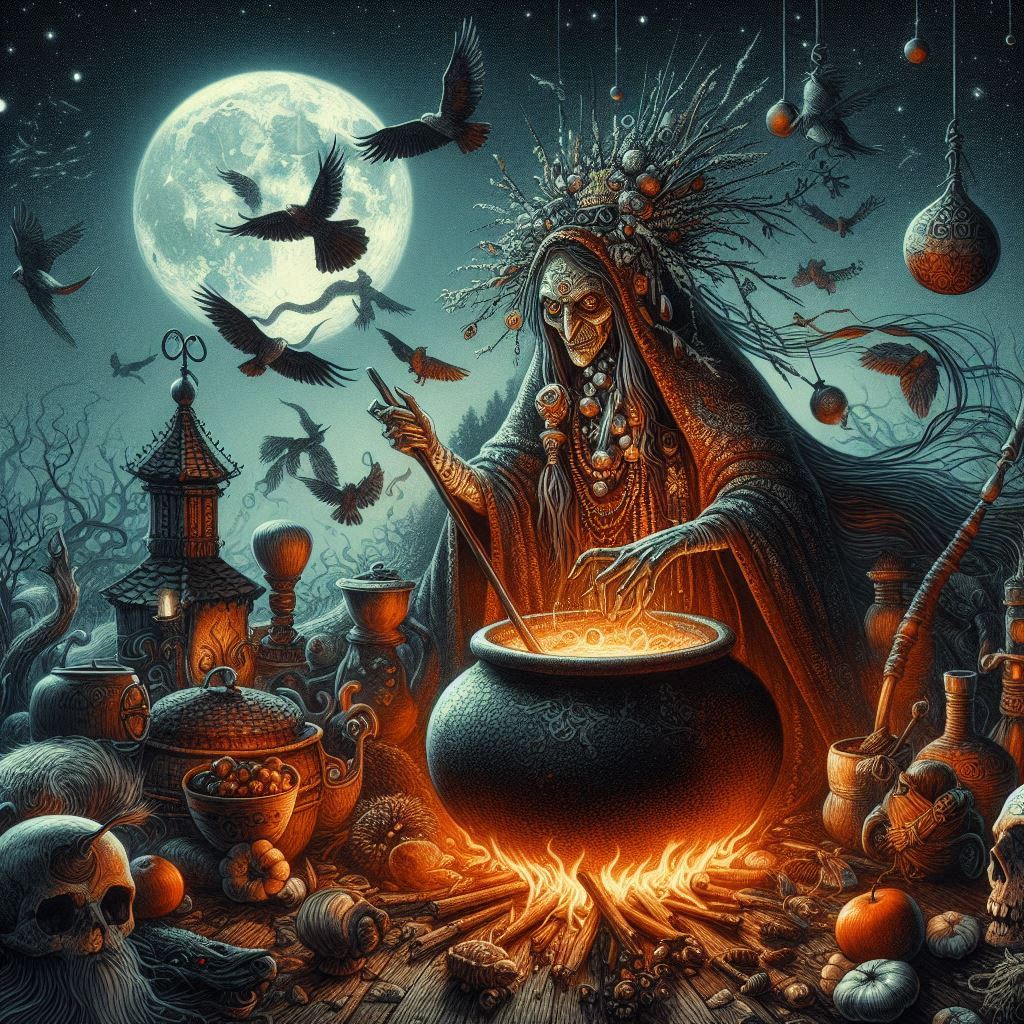
Nestled within the rich tapestry of Slavic folklore lies a character shrouded in enigma and intrigue—Baba Yaga. For centuries, her name has echoed through the annals of time, captivating the imaginations of storytellers and enchanting audiences with her peculiar charm. But who is this elusive figure, and what secrets does she hold? Join me as we embark on a journey to unravel the legend of Baba Yaga, a journey that promises to be as enlightening as it is enthralling.
From the frost-kissed forests of Eastern Europe to the bustling streets of modern cities, the tale of Baba Yaga continues to weave its spell, drawing curious souls into its web of wonder. Whether you’re a seasoned scholar of folklore or a curious novice eager to explore the unknown, prepare to be transported to a realm where magic and mystery reign supreme. But first, let us delve into the origins of this bewitching legend and uncover the threads that bind Baba Yaga to the fabric of Slavic culture.
Origins of Baba Yaga: Tracing the Roots
To understand Baba Yaga is to journey through the annals of history, where folklore intertwines with the fabric of everyday life. The roots of her legend run deep, stretching back centuries to a time when superstition and tradition held sway over the hearts and minds of the Slavic people. But where did she truly originate, and what historical and cultural forces shaped her into the iconic figure we know today?
In the dim recesses of ancient Slavic mythology, Baba Yaga emerges as a complex amalgamation of pagan beliefs and Christian influences. Some scholars speculate that her origins can be traced back to the primal forces of nature, embodying the dualistic nature of life and death. Others point to her resemblance to ancient goddesses of fertility and wilderness, suggesting that she was once revered as a guardian of the natural world.
As the sands of time shifted and civilizations rose and fell, Baba Yaga underwent a metamorphosis, adapting to the changing landscapes of Slavic culture. With the advent of Christianity, her image was reshaped to fit within the framework of the new religious paradigm. No longer merely a pagan deity, she became synonymous with the archetype of the witch—a fearsome hag who dwelled in the depths of the forest, wielding her magic with capricious whimsy.
Yet, despite the passage of centuries, Baba Yaga remains an enigma, her origins obscured by the mists of time. Perhaps therein lies the allure of her legend—a tantalizing glimpse into a bygone era, where the boundaries between myth and reality blur and anything seems possible.
Characteristics of Baba Yaga: Unveiling the Enigma
Step cautiously now, dear reader, for we are about to peer into the heart of darkness itself—the lair of Baba Yaga. To describe her as merely a witch would be a gross oversimplification, for she is a creature of contradictions, a paradox wrapped in a riddle. But what, pray tell, do we know of her appearance and abilities?
Picture, if you will, a hunched figure cloaked in tattered robes, her iron teeth gleaming in the moonlight as she stirs her cauldron with a crooked finger. This is Baba Yaga—a fearsome sight to behold, yet strangely alluring in her grotesque beauty. But do not be fooled by her outward appearance, for beneath her wrinkled visage lies a keen intellect and a formidable mastery of the arcane arts.
Baba Yaga is no mere mortal; she is a force of nature, wielding powers beyond human comprehension. With but a wave of her hand, she can summon storms, shape-shift into various forms, and traverse the realms of the living and the dead with ease. Her hut, perched atop chicken legs and surrounded by a fence of human bones, serves as a testament to her otherworldly nature—a sanctuary for those brave enough to seek her counsel or foolish enough to incur her wrath.
But do not be deterred by her fearsome reputation, for Baba Yaga is not without her quirks. Despite her propensity for mischief and mayhem, she is also known to dispense wisdom to those who approach her with humility and respect. Indeed, many a hero has sought her out in times of need, only to emerge wiser and stronger for having braved her trials.
In the end, Baba Yaga remains a mystery wrapped in an enigma, her true nature known only to those brave enough to seek her out. So tread lightly, dear reader, and heed the words of caution—for to encounter Baba Yaga is to dance with the devil herself.
Baba Yaga in Folktales: Tales of Triumph and Tribulation
Ah, gather ’round, my friends, for I have tales to tell—tales of Baba Yaga and the brave souls who dared to cross her path. From the heart of the forest to the depths of the underworld, her stories abound, each more fantastical than the last. But what lessons do these tales impart, and what truths do they reveal about the enigmatic witch?
Let us begin with the story of Vasilisa the Beautiful, a young maiden forced to serve her cruel stepmother and stepsisters. In her darkest hour, Vasilisa seeks refuge with Baba Yaga, hoping to find solace and guidance in the witch’s domain. What awaits her is a series of trials and tribulations, each more harrowing than the last. But through wit and determination, Vasilisa emerges victorious, armed with the knowledge she needs to forge her own destiny.
Then there is the tale of Ivan the Fool, a simpleton who stumbles upon Baba Yaga‘s hut while wandering through the forest. Undeterred by the warnings of his peers, Ivan ventures inside, hoping to win the witch’s favor and secure her magical aid. What follows is a series of tests and challenges, each designed to test Ivan’s mettle and cunning. In the end, it is his kindness and humility that earn him Baba Yaga‘s respect, proving that true strength lies not in might, but in compassion.
But Baba Yaga is not always the villain of the piece, dear reader. In some tales, she is portrayed as a wise and benevolent figure, offering sage advice to those who seek her counsel. Whether she is guiding lost souls through the darkness or imparting ancient wisdom to weary travelers, Baba Yaga remains a beacon of hope in a world shrouded in darkness.
So heed these tales well, my friends, for within their pages lie the secrets of Baba Yaga and the timeless wisdom of Slavic folklore. But remember, dear reader, that these are but stories—guides to navigate the labyrinth of life, but not prescriptions for how to live it. The true path lies within, waiting to be discovered by those brave enough to seek it.
Symbolism and Interpretations: Decoding the Enigma
Behold, dear reader, as we embark upon a journey into the realm of symbolism and interpretation, where Baba Yaga reigns as queen of the arcane and the obscure. For beneath her guise as a fearsome witch lies a tapestry of meaning and significance, woven from the threads of myth and legend. But what truths do these symbols reveal, and how can we decipher the enigma of Baba Yaga?
At its core, Baba Yaga represents the primal forces of nature—the untamed wilderness that lies beyond the boundaries of civilization. Her hut, with its chicken legs and fence of human bones, is a testament to her connection to the earth and all its creatures. But it is her role as a guardian of the threshold—the liminal space between the known and the unknown—that truly defines her essence. For Baba Yaga is not merely a witch; she is a guide, leading travelers through the darkness and into the light.
Yet, Baba Yaga is also a mirror, reflecting back the fears and desires of those who encounter her. To some, she is a harbinger of doom, a malevolent force to be feared and avoided at all costs. To others, she is a source of wisdom and enlightenment, offering guidance to those who seek her counsel. In this way, Baba Yaga embodies the dualistic nature of existence—the light and the dark, the good and the evil, the known and the unknown.
But perhaps the most intriguing aspect of Baba Yaga is her ability to transcend time and space, existing simultaneously in the past, present, and future. She is a timeless figure, woven into the fabric of Slavic culture like a thread in the grand tapestry of life. And though her form may change and her stories may evolve, her essence remains constant—a reminder of the mysteries that lie beyond the grasp of human understanding.
So let us embrace the mystery of Baba Yaga, dear reader, and seek to unravel the secrets she holds. For in her stories lie the keys to unlocking the deeper truths of existence—the eternal dance of light and shadow, life and death, love and fear. But remember, dear reader, that these are but interpretations—guides to help us navigate the labyrinth of life, but not prescriptions for how to live it. The true path lies within, waiting to be discovered by those brave enough to seek it.
The Legacy of Baba Yaga: Enduring in Modernity
Enter now, fellow travelers, into the realm of modernity, where the echoes of Baba Yaga‘s legend still resonate with a haunting melody. Though centuries have passed since her tales first graced the lips of storytellers, her influence remains as potent as ever, weaving its way through the tapestry of contemporary culture. But how has Baba Yaga‘s legacy endured the passage of time, and what lessons can we glean from her enduring presence?
In literature and art, Baba Yaga is a muse—a source of inspiration for writers, painters, and creators of all kinds. From the pages of fantasy novels to the strokes of a masterful brush, her image is immortalized in countless forms, each capturing a different facet of her enigmatic nature. Yet, despite the diversity of interpretations, her essence remains unchanged—a symbol of the wild, the untamed, and the unknowable.
But it is not only in the realms of fiction and art that Baba Yaga holds sway. In the hearts and minds of those who still hold fast to the traditions of old, she is a guardian spirit—a protector of the natural world and all its inhabitants. From farmers seeking a bountiful harvest to travelers seeking safe passage through the wilderness, her name is whispered with reverence and respect, a beacon of hope in a world fraught with uncertainty.
Yet, for all her power and influence, Baba Yaga remains a mystery—a puzzle waiting to be solved, a riddle waiting to be unraveled. And perhaps therein lies the true secret of her enduring legacy—that, even in an age of science and reason, there are still mysteries beyond the grasp of human understanding. For Baba Yaga is not merely a relic of the past; she is a reminder of the vastness of the human imagination, and the boundless potential that lies within each and every one of us.
So let us embrace the legacy of Baba Yaga, dear reader, and celebrate the timeless wisdom of Slavic folklore. For in her stories lie the keys to unlocking the deeper truths of existence—the eternal dance of light and shadow, life and death, love and fear. But remember, dear reader, that these are but interpretations—guides to help us navigate the labyrinth of life, but not prescriptions for how to live it. The true path lies within, waiting to be discovered by those brave enough to seek it.
In the end, dear reader, the legend of Baba Yaga is but a guide—a map to navigate the twists and turns of the human experience. But it is up to each of us to chart our own course, to explore the mysteries that lie beyond the horizon, and to discover the truths that resonate within our hearts. So go forth, dear reader, and embrace the journey that lies ahead—for in the quest for knowledge and understanding, anything is possible.

