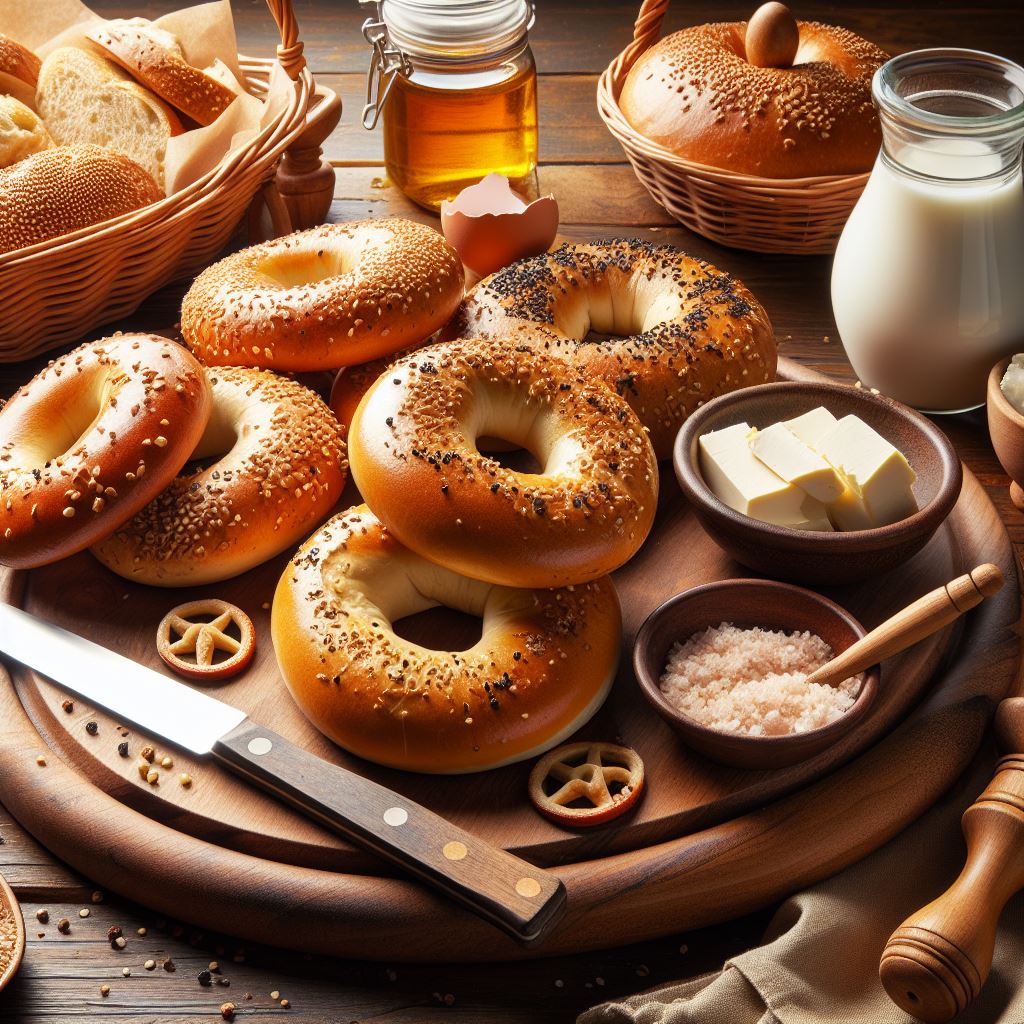
Bagels are more than just a bread; they’re a culinary icon, steeped in tradition and flavor. Dating back to the Jewish communities of Poland in the 17th century, these round delights have since become a beloved staple worldwide. What sets a bagel apart from other breads is its unique preparation method. Unlike typical loaves, homemade bagels undergo a process of boiling before baking, resulting in that distinctive chewy texture and glossy exterior.
To truly appreciate the art of bagel making, it’s essential to understand the role of each ingredient. Flour, yeast, water, salt, and a touch of sweetness are the building blocks of any good bagel recipe. Traditionalists swear by high-gluten flour for its ability to yield a chewier texture, while others opt for a blend of flours to achieve the perfect balance of chewiness and tenderness.
One interesting fact about bagels is their shape, which is not just for aesthetics. Legend has it that the hole in the center of a bagel served a practical purpose: it allowed vendors to string them on dowels for easy transportation and display. Today, the hole remains a defining feature of the bagel, contributing to its even baking and satisfying chew.
As you embark on your DIY bagel making journey, keep in mind that patience is key. While the process may seem daunting at first, there’s something deeply satisfying about crafting your own batch of bagels from scratch. So, roll up your sleeves and prepare to experience the magic of homemade bagels firsthand.
Essential Ingredients and Equipment
Before diving into the world of homemade bagels, it’s crucial to gather all the necessary ingredients and equipment. Let’s start with the basics:
- Flour: Opt for high-gluten flour or bread flour for that classic chewy texture. You can also experiment with whole wheat or alternative flours for a unique twist.
- Yeast: Active dry yeast or instant yeast will help your bagels rise to perfection. Make sure it’s fresh for optimal results.
- Water: Use lukewarm water to activate the yeast and hydrate the dough.
- Salt: Enhances the flavor of the dough and helps control yeast fermentation.
- Sweetener: Traditional bagels often include malt syrup or honey for a hint of sweetness. Feel free to substitute with sugar or maple syrup if desired.
In addition to ingredients, you’ll need some specialized equipment to streamline the bagel-making process:
- Mixing Bowl: A large bowl for mixing and kneading the dough.
- Stand Mixer or Hand Mixer: While hand-kneading is an option, a mixer can save time and effort.
- Baking Sheet: For shaping and baking the bagels.
- Parchment Paper or Silicone Baking Mat: Prevents the bagels from sticking to the baking sheet.
- Large Pot: Used for boiling the bagels before baking.
- Slotted Spoon: For transferring the boiled bagels to the baking sheet.
- Optional Toppings: Sesame seeds, poppy seeds, everything bagel seasoning, etc., for customizing your creations.
Fun fact: Did you know that the average American consumes about 11 bagels per year? That’s a lot of doughy deliciousness!
Now that you have all the necessary ingredients and equipment assembled, you’re ready to roll up your sleeves and get started on your DIY bagel-making adventure.
Mastering the Dough
The heart of any great bagel lies in its dough, and mastering this crucial step is essential for achieving bakery-quality results at home. Here’s a step-by-step guide to creating the perfect bagel dough:
- Mixing: Begin by combining your flour, yeast, water, salt, and sweetener in a large mixing bowl. Use a stand mixer fitted with a dough hook attachment or your hands to knead the dough until it’s smooth and elastic. This process typically takes about 8-10 minutes.
- Resting: Once the dough is well-kneaded, transfer it to a lightly oiled bowl, cover it with plastic wrap or a clean kitchen towel, and let it rest for about an hour. This allows the yeast to activate and the dough to rise, resulting in a lighter texture.
- Shaping: After the dough has doubled in size, punch it down to release any air bubbles, then divide it into equal-sized portions. Roll each portion into a ball, then use your fingers to poke a hole in the center and stretch it out to form the classic bagel shape. Place the shaped bagels on a parchment-lined baking sheet, cover them loosely with plastic wrap, and let them rest for another 20-30 minutes.
- Boiling: While the bagels are resting, bring a large pot of water to a gentle boil. Carefully lower the bagels into the water, a few at a time, and boil them for about 1-2 minutes per side. This step is what gives bagels their signature chewy texture and shiny crust.
- Baking: Preheat your oven to the specified temperature, typically around 400°F (200°C). Once the bagels have been boiled, transfer them back to the parchment-lined baking sheet and sprinkle them with your desired toppings. Bake them in the preheated oven for 20-25 minutes, or until they’re golden brown and cooked through.
By following these steps, you’ll be well on your way to perfecting the art of homemade bagel making. Don’t be discouraged if your first attempt isn’t flawless – like any culinary skill, DIY bagel making takes practice and patience. Experiment with different flour blends, toppings, and shaping techniques until you find the combination that suits your taste buds.
Shaping and Boiling Techniques
Shaping and boiling are the secret ingredients to achieving that quintessential bagel texture and flavor. Follow these tips to ensure your homemade bagels come out perfectly every time:
- Shaping: When shaping your bagels, aim for uniformity in size to ensure even baking. Use your fingers to gently stretch the dough into a ring shape, making sure the hole in the center is large enough to prevent it from closing up during boiling and baking. Don’t worry if your first few attempts aren’t perfect – practice makes perfect!
- Boiling: Boiling is what sets bagels apart from other breads, giving them their characteristic chewiness and glossy crust. Make sure your water is at a gentle boil before adding the bagels, and only boil a few at a time to prevent overcrowding. Flip the bagels halfway through boiling to ensure they cook evenly on both sides.
- Flavoring: Consider adding flavorings to the boiling water for an extra burst of flavor. Traditional options include honey, malt syrup, or baking soda, but feel free to get creative with herbs, spices, or citrus zest.
- Timing: Boil the bagels for about 1-2 minutes per side, depending on the desired chewiness. Be careful not to over-boil them, as they may become too dense.
- Cooling: After boiling, transfer the bagels to a wire rack to cool slightly before baking. This allows excess moisture to evaporate, ensuring a crispier crust.
Fun fact: The term “bagel” is derived from the Yiddish word “beygl,” which in turn comes from the German word “bougel,” meaning “ring” or “bracelet.”
With these shaping and boiling techniques in your arsenal, you’ll be well-equipped to tackle the next step in your homemade bagel-making adventure: baking to perfection.
Baking to Perfection
Baking is the final step in the bagel-making process, where your doughy creations transform into golden-brown delights. Follow these tips to ensure your homemade bagels come out of the oven perfectly baked:
- Preheat: Preheat your oven to the specified temperature, typically around 400°F (200°C). A hot oven ensures that the bagels begin to cook immediately, resulting in a crisp exterior and tender interior.
- Baking Surface: Place your shaped and boiled bagels on a parchment-lined baking sheet or a silicone baking mat. This prevents them from sticking to the baking surface and makes cleanup a breeze.
- Toppings: Sprinkle your bagels with your desired toppings before baking. Popular options include sesame seeds, poppy seeds, everything bagel seasoning, or coarse salt. Get creative and experiment with different combinations to find your favorite flavor profile.
- Rotation: Halfway through the baking process, rotate the baking sheet to ensure even browning. This prevents any hot spots in your oven from causing uneven cooking.
- Doneness: Bake the bagels for 20-25 minutes, or until they’re golden brown and cooked through. They should sound hollow when tapped on the bottom and feel firm to the touch.
- Cooling: Allow the baked bagels to cool on a wire rack for at least 10-15 minutes before serving. This allows them to firm up slightly and makes them easier
to handle. Resist the temptation to slice into them right away – patience is key for achieving the perfect texture.
Fun fact: Bagels were traditionally eaten plain or with simple toppings like butter or cream cheese. It wasn’t until the 1970s that innovative bakers began experimenting with flavored cream cheeses and extravagant bagel sandwich combinations.
With these baking tips in mind, you’re well on your way to mastering the art of homemade bagel making. But before you dive in, remember that practice makes perfect. Don’t be discouraged if your first batch isn’t flawless – each attempt is a learning experience that brings you one step closer to bagel perfection.
Flavorful Variations and Toppings
One of the joys of homemade bagel making is the endless opportunity for creativity when it comes to flavors and toppings. Here are some flavorful variations and topping ideas to inspire your bagel-making adventures:
- Classic Sesame: Coat your bagels with sesame seeds for a simple yet satisfying crunch. Sesame seeds add a nutty flavor that pairs perfectly with cream cheese or smoked salmon.
- Everything Bagel: Recreate the beloved everything bagel flavor by sprinkling a mixture of sesame seeds, poppy seeds, dried minced garlic, dried minced onion, and coarse salt on top of your bagels before baking. This all-in-one seasoning blend offers a burst of savory goodness in every bite.
- Cinnamon Raisin: Add sweetness to your bagels by incorporating cinnamon and raisins into the dough. This flavorful combination is reminiscent of a classic cinnamon raisin toast and pairs beautifully with a schmear of cream cheese.
- Asiago Cheese: Amp up the savory factor by adding shredded asiago cheese to your bagel dough. The sharp, tangy flavor of asiago cheese adds depth to your bagels and pairs wonderfully with sliced tomatoes and fresh basil.
- Jalapeno Cheddar: For those who crave a little heat, try adding diced jalapenos and shredded cheddar cheese to your bagel dough. These spicy, cheesy delights are perfect for kicking your breakfast or lunch up a notch.
- Blueberry Bliss: Incorporate fresh or dried blueberries into your bagel dough for a burst of fruity sweetness. These vibrant blueberry bagels are delightful on their own or with a dollop of tangy yogurt.
Whether you prefer sweet or savory, there’s a bagel flavor and topping combination to suit every palate. Don’t be afraid to experiment with different ingredients and get creative in the kitchen. After all, half the fun of DIY bagel making is customizing your creations to suit your taste preferences.
Troubleshooting Common Issues
While making homemade bagels is a rewarding endeavor, it’s not without its challenges. Here are some common issues you may encounter along the way and how to troubleshoot them:
- Dense Texture: If your bagels turn out dense instead of light and chewy, it could be due to over-kneading the dough or not allowing it to rise properly. Make sure to knead the dough until it’s smooth and elastic, and give it enough time to double in size during the resting period.
- Flat Bagels: Flat bagels can result from under-proofing the dough or not shaping them properly. Make sure to let the dough rest and rise adequately before shaping, and be sure to form a tight ring with a large enough hole in the center to prevent them from deflating during boiling and baking.
- Uneven Browning: If your bagels brown unevenly in the oven, it could be due to an uneven distribution of heat or overcrowding on the baking sheet. Make sure to rotate the baking sheet halfway through the baking process and bake the bagels in a single layer with enough space between them for proper air circulation.
- Sticky Dough: Sticky dough can be difficult to work with and may result in misshapen bagels. If your dough is too sticky, try adding a little more flour, a tablespoon at a time, until it reaches the right consistency. Be careful not to add too much flour, as this can make the bagels too dense.
- Burnt Bottoms: If the bottoms of your bagels are burning before the tops are fully baked, try placing a second baking sheet underneath the first or moving the rack to a higher position in the oven. You can also reduce the baking temperature slightly and bake the bagels for a few minutes longer to ensure they’re fully cooked without burning.
By addressing these common issues, you’ll be better equipped to troubleshoot any problems that arise during the bagel-making process and achieve bakery-quality results every time.
Serving Suggestions and Storage Tips
Now that you’ve mastered the art of homemade bagel making, it’s time to enjoy the fruits of your labor. Here are some serving suggestions and storage tips to ensure your bagels stay fresh and delicious:
- Enjoy Freshly Baked: There’s nothing quite like biting into a warm, freshly baked bagel straight from the oven. Serve your homemade bagels plain or with your favorite toppings, such as cream cheese, smoked salmon, avocado, or jam.
- Bagel Sandwiches: Get creative with your bagel creations by turning them into delicious sandwiches. Fill your bagels with sliced deli meats, cheese, veggies, and condiments for a satisfying meal on the go.
- Toasting: If your bagels start to lose their freshness, revive them by toasting them until they’re golden brown and crispy. Toasting not only adds extra flavor and texture but also helps warm them up for a cozy breakfast or snack.
- Freezing: To extend the shelf life of your homemade bagels, allow them to cool completely, then wrap them individually in plastic wrap or aluminum foil and place them in a freezer-safe bag or container. Frozen bagels can be stored in the freezer for up to three months.
- Thawing: When you’re ready to enjoy your frozen bagels, simply remove them from the freezer and let them thaw at room temperature for a few hours or overnight in the refrigerator. Once thawed, you can toast them as usual or reheat them in the oven for a few minutes until warmed through.
- Reheating: If you prefer your bagels warm, you can reheat them in the oven at 350°F (175°C) for 5-10 minutes or until heated through. Alternatively, you can slice them in half and toast them in a toaster until they’re crispy and golden brown.
With these serving suggestions and storage tips, you can enjoy homemade bagels whenever the craving strikes. Whether you prefer them fresh out of the oven or toasted to perfection, there’s no wrong way to enjoy these delicious homemade treats.
Here are five delicious bagel recipes with ingredients and preparation instructions:
- Classic Plain Bagels:
- Ingredients:
- 4 cups bread flour
- 1 tablespoon sugar
- 2 teaspoons salt
- 1 tablespoon active dry yeast
- 1 1/4 cups warm water
- Preparation:
- In a large mixing bowl, combine flour, sugar, salt, and yeast. Gradually add warm water and mix until a dough forms.
- Knead the dough on a floured surface for about 10 minutes, until it becomes smooth and elastic.
- Divide the dough into 8 equal portions and shape each portion into a ball. Flatten each ball slightly and poke a hole in the center with your thumb to form a bagel shape.
- Place the shaped bagels on a baking sheet lined with parchment paper, cover with a clean kitchen towel, and let them rise for about 30-45 minutes.
- Preheat your oven to 425°F (220°C). Bring a large pot of water to a boil and carefully drop the bagels in, boiling for 1-2 minutes on each side.
- Transfer the boiled bagels back to the baking sheet and bake in the preheated oven for 20-25 minutes, or until golden brown.
- Everything Bagels:
- Ingredients:
- 4 cups bread flour
- 1 tablespoon sugar
- 2 teaspoons salt
- 1 tablespoon active dry yeast
- 1 1/4 cups warm water
- Everything bagel seasoning (poppy seeds, sesame seeds, dried minced garlic, dried minced onion, and coarse salt)
- Preparation:
- Follow the same preparation steps as for plain bagels.
- Before baking, brush the boiled bagels with water and sprinkle generously with everything bagel seasoning.
- Bake as directed for plain bagels.
- Cinnamon Raisin Bagels:
- Ingredients:
- 4 cups bread flour
- 1/4 cup brown sugar
- 1 1/2 teaspoons ground cinnamon
- 2 teaspoons salt
- 1 tablespoon active dry yeast
- 1 1/4 cups warm water
- 3/4 cup raisins
- Preparation:
- In a large mixing bowl, combine flour, brown sugar, cinnamon, salt, and yeast. Gradually add warm water and mix until a dough forms.
- Knead the dough on a floured surface for about 10 minutes, until it becomes smooth and elastic.
- Flatten the dough and sprinkle raisins evenly over the surface. Fold the dough over and knead until the raisins are evenly distributed.
- Proceed with shaping, boiling, and baking as directed for plain bagels.
- Asiago Cheese Bagels:
- Ingredients:
- 4 cups bread flour
- 1 tablespoon sugar
- 2 teaspoons salt
- 1 tablespoon active dry yeast
- 1 1/4 cups warm water
- 1 cup shredded asiago cheese
- Preparation:
- Follow the same preparation steps as for plain bagels.
- Before baking, sprinkle shredded asiago cheese over the boiled bagels.
- Bake as directed for plain bagels.
- Blueberry Bagels:
- Ingredients:
- 4 cups bread flour
- 1/4 cup sugar
- 2 teaspoons salt
- 1 tablespoon active dry yeast
- 1 1/4 cups warm water
- 1 cup fresh or dried blueberries
- Preparation:
- In a large mixing bowl, combine flour, sugar, salt, and yeast. Gradually add warm water and mix until a dough forms.
- Knead the dough on a floured surface for about 10 minutes, until it becomes smooth and elastic.
- Flatten the dough and sprinkle blueberries evenly over the surface. Fold the dough over and knead until the blueberries are evenly distributed.
- Proceed with shaping, boiling, and baking as directed for plain bagels.
Enjoy experimenting with these delicious bagel recipes!
Your Bagel Journey Awaits
Congratulations! You’ve completed your crash course in DIY bagel making and are now equipped with the knowledge and skills to create bakery-quality bagels in the comfort of your own kitchen. From mastering the dough to perfecting the baking process, you’ve learned the ins and outs of crafting irresistible homemade bagels that are sure to impress.
But remember, this guide is just the beginning of your bagel journey. There are endless possibilities for flavor combinations, shaping techniques, and topping choices waiting to be explored. Don’t be afraid to get creative and experiment with different ingredients to put your own unique spin on this beloved classic.
So, roll up your sleeves, preheat your oven, and let your imagination run wild. Whether you’re a seasoned baker or a novice in the kitchen, there’s no better time to embark on your homemade bagel-making adventure. Gather your ingredients, fire up your oven, and get ready to savor the satisfaction of biting into a warm, freshly baked bagel that you made with your own two hands.
And remember, while this guide provides valuable tips and techniques to help you along the way, everyone’s bagel-making journey is unique. Don’t be discouraged by setbacks or imperfections – embrace them as opportunities to learn and grow. With practice and perseverance, you’ll soon be a bona fide bagel master, delighting friends and family with your delicious creations.
So go forth, fellow bagel enthusiast, and may your kitchen be filled with the aroma of freshly baked bagels for years to come. Your bagel journey awaits – happy baking!