


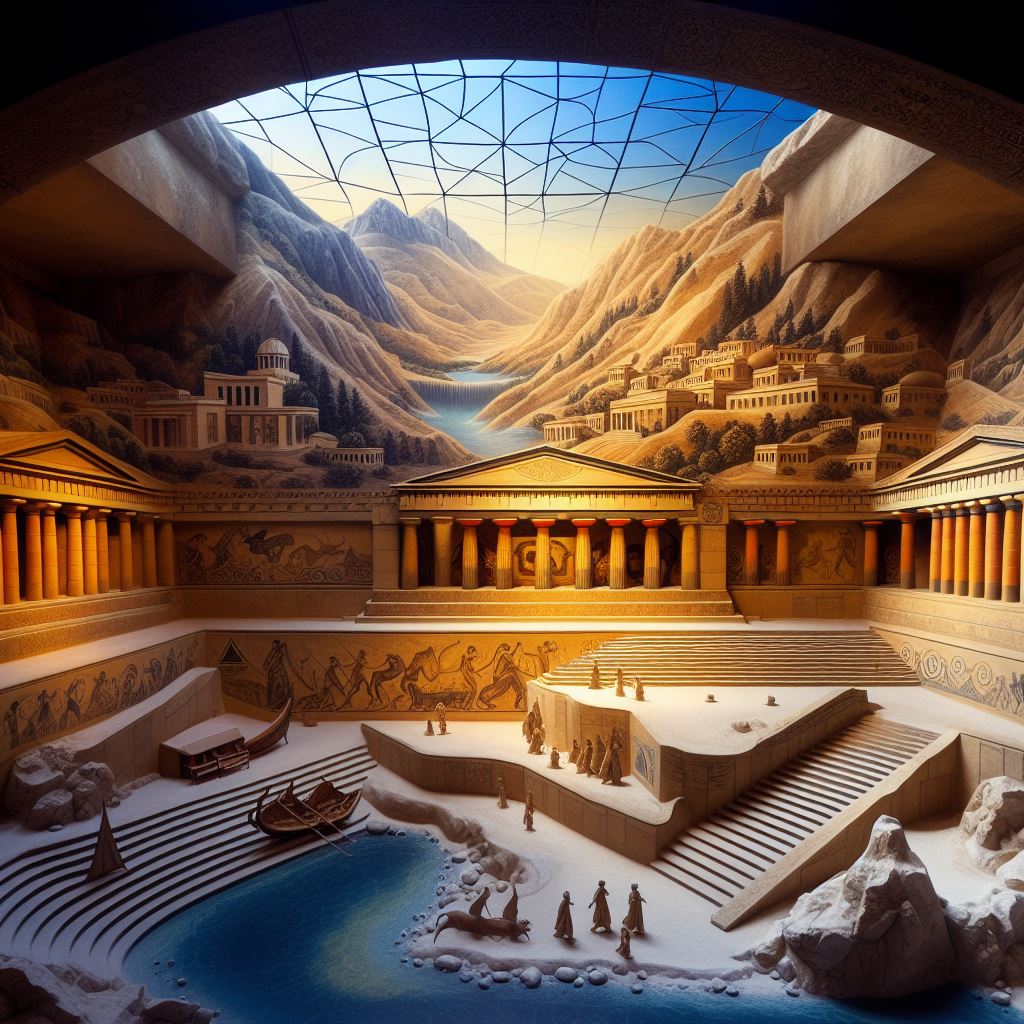
Welcome to the captivating world of Knossos, where the echoes of an ancient civilization still resonate through time. Nestled on the island of Crete in Greece, the archaeological site of Knossos offers a doorway into the heart of Minoan civilization. Picture yourself standing amidst the remnants of a once-thriving city, surrounded by tales of myths, legends, and architectural wonders.
Knossos is not merely a place frozen in the past; it’s a testament to the ingenuity and creativity of humanity. As we embark on this journey together, prepare to be enthralled by the mysteries waiting to be unraveled beneath the sun-soaked soil of Crete. From the labyrinthine corridors to the vibrant frescoes adorning the palace walls, every corner of Knossos has a story to tell.
Unveiling the Ancient City
The story of Knossos begins with the pioneering efforts of archaeologists who dared to delve into the depths of history. Imagine the excitement of the first excavations, as the earth yielded fragments of a lost world. Among these intrepid explorers was Sir Arthur Evans, whose vision and dedication brought Knossos back to life after centuries of obscurity.
The journey of discovery at Knossos is ongoing, with each layer of soil revealing new insights into Minoan society. From the remnants of grand palaces to humble dwellings, every artifact tells a tale of a civilization flourishing in the embrace of Crete‘s fertile land.
The allure of Knossos lies not only in its ancient past but also in the questions it continues to pose to modern scholars. As we navigate through the labyrinth of history, let us remember that the journey itself is as important as the destination.
Exploring the Palace Complex
Step into the palace complex of Knossos and be prepared to be awestruck by its architectural marvels. Spread across vast grounds, the palace is a labyrinth of corridors, chambers, and courtyards, each revealing glimpses of Minoan ingenuity.
The layout of Knossos palace is a testament to meticulous planning, with interconnected rooms and passageways designed to both impress and confuse. As you wander through its halls, take note of the intricate frescoes that adorn the walls, depicting scenes of everyday life, religious rituals, and mythological tales.
One cannot help but marvel at the advanced engineering techniques employed by the Minoans, from the intricate plumbing systems to the grand staircases that lead to the upper levels of the palace. In Knossos, every corner holds a secret waiting to be uncovered.
As you explore the palace complex, immerse yourself in the world of the Minoans and imagine life within these ancient walls. From the bustling activity of the central courtyard to the quiet solitude of the royal chambers, Knossos offers a glimpse into a civilization that thrived thousands of years ago.
Myths and Legends of Knossos
Step into the realm of myth and legend as we explore the captivating tales surrounding Knossos. At the heart of Minoan mythology lies the enigmatic figure of the Minotaur, a creature half-man, half-bull, said to dwell within the labyrinth beneath the palace.
According to legend, the Minotaur was born from the union of Queen Pasiphae and a majestic bull, a punishment inflicted by the gods for the sins of King Minos. To contain the beast, the famed architect Daedalus constructed a labyrinth so complex that even he struggled to find his way out.
Enter the labyrinth if you dare, but beware the wrath of the Minotaur lurking in its depths. Legend has it that Theseus, son of King Aegeus of Athens, ventured into the labyrinth with a ball of thread given to him by Princess Ariadne. With this thread as his guide, Theseus successfully navigated the maze and slew the Minotaur, freeing Knossos from its curse.
Yet, amidst the tales of heroes and monsters, lies the question of truth. Were these stories merely myths spun from the imagination of ancient storytellers, or do they hold kernels of historical truth? As we delve deeper into the mysteries of Knossos, let us untangle fact from fiction and uncover the truth hidden within the shadows of myth.
Daily Life in Minoan Society
Step into the vibrant tapestry of Minoan society and discover the intricacies of daily life in Knossos. From bustling marketplaces to tranquil courtyards, the city was a hub of activity, where people from all walks of life converged to exchange goods, ideas, and culture.
Central to Minoan society was the concept of social structure and hierarchy. At the top of the hierarchy were the ruling elite, including the king and his courtiers, who oversaw the affairs of the city-state. Below them were the artisans, merchants, and farmers who formed the backbone of the economy, contributing to the prosperity of Knossos through their labor and skill.
Gender roles played a significant role in Minoan society, with men typically engaging in activities such as hunting, warfare, and politics, while women were responsible for managing the household and raising children. However, unlike in many other ancient civilizations, Minoan women enjoyed a relatively high degree of freedom and autonomy, with some even participating in religious rituals and public life.
Economic activities thrived in Knossos, fueled by trade networks that stretched across the Mediterranean. From precious metals and exotic goods to agricultural produce and fine pottery, the city’s merchants traded far and wide, bringing wealth and prosperity to its inhabitants.
As you immerse yourself in the daily rhythms of Minoan life, take a moment to appreciate the ingenuity and creativity of a civilization that flourished thousands of years ago. From the intricately decorated pottery to the finely crafted jewelry, every artifact tells a story of innovation and artistry that continues to inspire awe to this day.
Art and Culture of the Minoans
Enter the vibrant world of Minoan art and culture, where creativity and expression flourished amidst the sun-drenched landscapes of Knossos. From the vibrant colors of frescoes to the intricate designs of pottery, the artistic legacy of the Minoans continues to captivate and inspire.
At the heart of Minoan art lies a deep connection to nature and the rhythms of the natural world. Depictions of animals, plants, and marine life abound in Minoan art, reflecting the close relationship between the people of Knossos and their environment. Whether it’s the graceful movements of dolphins or the lush foliage of olive trees, every element of nature is celebrated in Minoan art.
Symbolism played a significant role in Minoan art, with motifs and patterns holding deeper meanings beyond their aesthetic appeal. The iconic symbol of the bull, for example, represented strength, fertility, and vitality, while the double axe symbolized power and authority. These symbols adorned everything from pottery and jewelry to the walls of the palace, serving as reminders of the values and beliefs of Minoan society.
Religion also played a central role in Minoan culture, with rituals and ceremonies honoring the gods and goddesses believed to govern the natural world. From the mysterious Snake Goddess to the enigmatic Horns of Consecration, religious iconography permeated every aspect of Minoan life, offering insights into their beliefs and practices.
As you explore the art and culture of the Minoans, take a moment to reflect on the beauty and complexity of a civilization that flourished thousands of years ago. From the grandeur of the palace to the intimacy of everyday objects, Minoan art offers a window into a world that continues to inspire wonder and fascination to this day.
Legacy and Influence
Reflecting on the legacy of Knossos, we are reminded of the profound impact that this ancient civilization has had on subsequent cultures and societies. From its architectural innovations to its artistic achievements, the legacy of Knossos continues to shape our understanding of the ancient world.
The influence of Minoan civilization can be seen in various aspects of modern life, from architecture and art to literature and mythology. The concept of the labyrinth, for example, has permeated Western culture, appearing in works of literature such as Dante’s Inferno and contemporary films like Pan’s Labyrinth. Similarly, the imagery of the bull and the double axe continues to resonate in popular culture, serving as symbols of strength, power, and resilience.
Beyond its cultural contributions, the legacy of Knossos also extends to the field of archaeology, where the pioneering work of Sir Arthur Evans paved the way for future generations of scholars and researchers. Today, the site continues to be a focal point for archaeological study, offering new insights into the complexities of Minoan society and its place in the ancient world.
As we reflect on the legacy of Knossos, let us not only celebrate its achievements but also acknowledge the ongoing challenges of preserving and protecting this invaluable heritage. From conservation efforts to educational initiatives, it is up to each of us to ensure that the legacy of Knossos continues to inspire and educate future generations.
While our guide has provided a glimpse into the wonders of Knossos, it is important to remember that this is just the beginning. There is still so much more to learn, explore, and discover about this ancient civilization and the people who called it home.
As you continue your own exploration of Knossos and the Minoan world, remember to approach it with curiosity, open-mindedness, and a sense of wonder. Whether you’re an amateur historian, a seasoned archaeologist, or simply someone with a passion for the past, there is always something new to uncover and learn.
So go forth, dear reader, and embark on your own journey of discovery. Whether you find yourself wandering the ruins of Knossos or diving into the depths of Minoan history, may you find inspiration, enlightenment, and a deeper connection to the wonders of the ancient world.
Remember, this article is merely a guide, a starting point for your own exploration. The true magic of Knossos lies in the journey itself, so embrace it with open arms and let the mysteries of the past guide you on your quest for knowledge and understanding.